
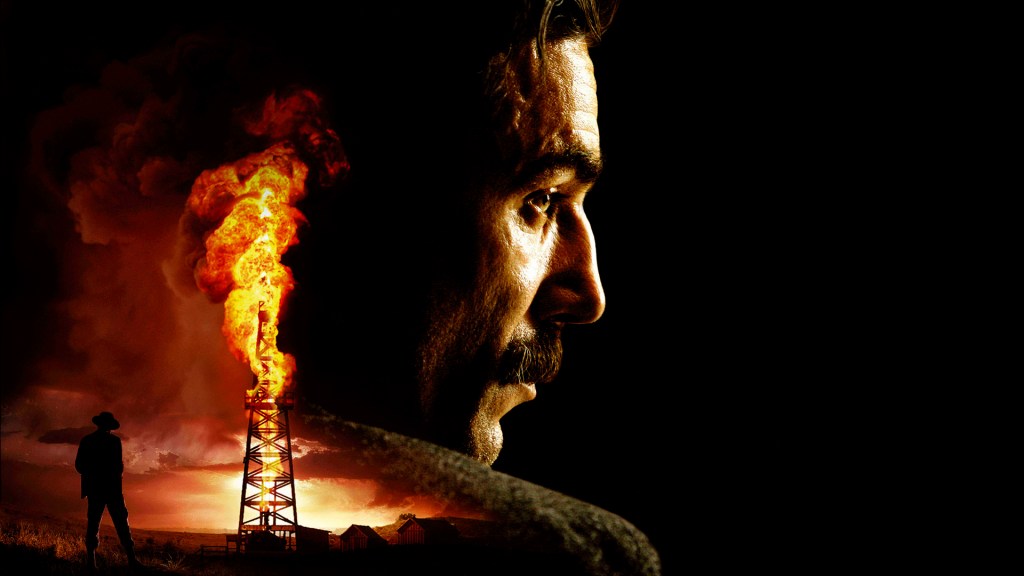
“I am Finished“
With these words, ended one of the most influential and well developed cinematic stories of films and I even daresay literature history. Very loosely based on Upton Sinclair’s prestigious novel “Oil”, There will be Blood explores the life of Daniel Plainview, an ordinary silver miner turned oil tycoon and his journey along with his adopted “son and partner” H.W. Plainview through the barren oil laden lands of 1911 America. A period when America was gaining ground as a true modern capitalist country.
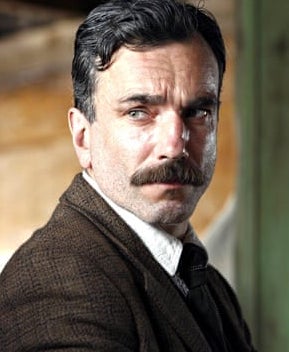
There will be Blood stands as a character study, one which takes pride in all the nuances that it upholds and flaunts in developing and understanding the life of Daniel Plainview, a ruthless oil prospector whose means and efforts turn more and more questionable as every second pushes him further into the brink of madness and isolation. Though the film is not blatant with its theme of isolation by any means, but I suggest that it shares a subtle resemblance with Martin Scorsese’s “Taxi Driver”. But I will come to that later.
Daniel Plainview’s greed and his cutthroat competitive nature drives him in subduing an oil empire of his own. In the process he hurts everyone around him and unknowingly, himself as well. He talks about the various riches and prosperity that will follow up with his arrival to innocent townsmen, while stealthily taking their lands and leaving them with nothing but barren lands and empty oil rigs. Anderson shows it with the shots of arid fields hustling with labourers, juxtaposed with Plainview’s monologue of prosperity and wealth looming over the frame. Daniel sends his adopted son away when he loses his hearing, for he becomes a liability rather than an asset. In one scene, his hatred for other people is manifested through dialogues as he says “I have a competition in me, I want no one else to succeed” and states how he looks at people and “sees nothing worth liking”. In spite of how the initial storyline progresses; Anderson never keeps the character in complete darkness. Through Henry’s storyline, Anderson portrays a side of Daniel which is more humane and which helps us empathise with him. His greed and competitiveness perhaps comes from a deep embroiled pain, which maybe he tries to unconsciously overcome through materialism. Even though we question it, we understand the causation of his action.
Throughout the story, Eli Sunday (played by the highly capable Paul Dano), Daniel’s primary competition is a key figure in bringing out the worst in Daniel. Eli is a pastor of the Church in Little Boston. He is sly, manipulative and a charismatic spokesperson, qualities that Daniel possesses as well. In one scene in the Church, Eli attempts to rid an old lady off of her arthritis, a “ghost” that had been haunting her and degrading her health for days. Eli’s voice and his snake-like movement, along with the obvious ridiculousness of his method pushes the scene to the point of exhaustion and we as the audience question the naivety of the people who willingly attend his superstitious fiascos. While Daniel instills control on the townsmen through capitalism, Eli does this through religion. It is this need for control that sets up and evolves conflict between these two characters.
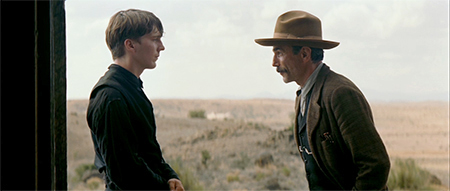
Writer and director Paul Thomas Anderson uses long shots along with multiple framings throughout the film and cuts only when necessary, maintaining the rhythm of shots without them looking monotonous. The average shot length in the film is about 12 seconds per shot (source; Nerdwriter’s video essay “deconstructing There will be Blood”). Daniel Day Lewis undoubtedly delivered his career best performance which rightfully earned him his 2nd Oscar for Best Male Actor. The dark smoothness of his voice combined with his daunting posture and movement, instills a discrete form of aggression that makes him a welcoming businessman and an intimidating person at the same time. Even while playing a character who resides in moral greys, the genius of Daniel Day Lewis shows as to how he snatches at the audience’s attention, redirects it onto a morally flawed character and never lets it go. Paul Thomas Anderson rightfully casted Day Lewis for this role, for you need an inherently gifted actor who can understand the intricate details of a character’s mindset and behaviour through a mere piece of paper. Lewis’ meticulous acting skills allows Anderson to hold lengthy close up shots without pushing the viewer to the point of bore or exhaustion, and in turn giving Anderson more creative freedom in accordance with the shot length, tone and rhythm of the movie. There is also a speculation of the resemblance and similarity in Daniel Plainview and the iconic character Count Dracula from the 1897 gothic horror novel ‘Dracula’, written by Bram Stoker. While in Dracula, the main object of interest for the Count was blood, the main object of desire for Daniel is oil. The title “There will be Blood” further hints at this speculation.
The score for the film, composed by the ingenious composer Jonny Greenwood ( yes, the lead guitarist of Radiohead), essentially captures the mood of the film. The first dialogue of the film is not spoken in the first 15 minutes of the movie, and it was upto P.T. Anderson, the cinematographer Robert Elswit and Greenwood to set the tone of the movie. The lack of dialogues put a greater pressure on Greenwood to replace sound with words and essentially tell a mini story using only music. And Greenwood certainly lives upto the standard. His scores have that capability to play around and indulge with the audience upfront, while simultaneously hiding behind the curtain and inviting them to not only experience the movie through visual language and dialogues, but through music as well. I personally enjoy listening to his music, especially when I am writing.
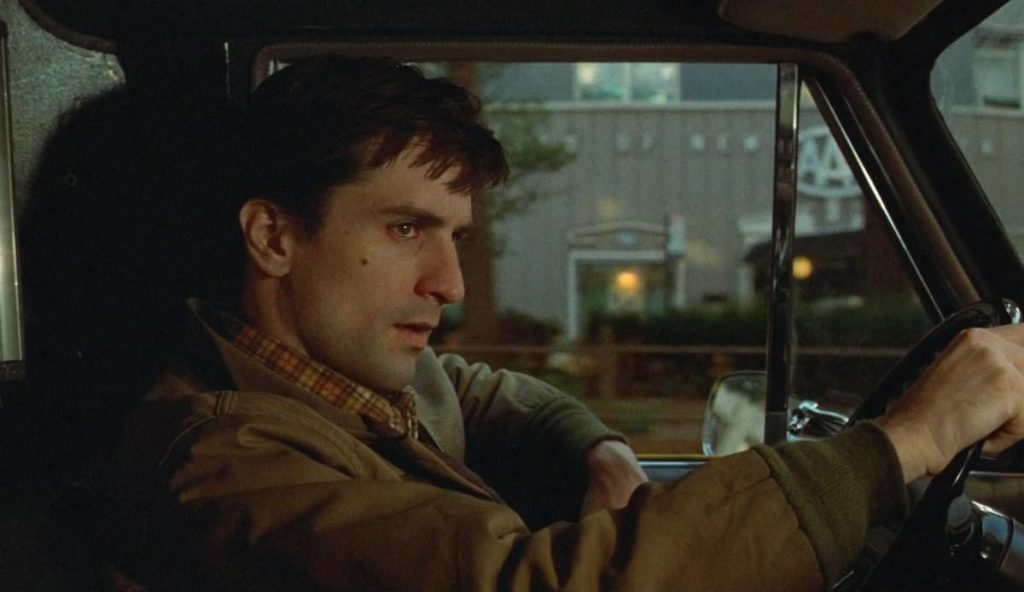
In accordance with its resemblance to Taxi Driver’s protagonist Travis Bickle, I feel that the theme of loneliness exists in both Taxi Driver and There will be Blood, but it is explored much less and with much subtlety in the latter. Paul Schrader, the writer of Taxi Driver considered his film a loose autobiography, as it was during a very depressing phase of his life, when he picked up writing the screenplay as a form of therapy. Paul Schrader realised during the creative process that instead of writing about loneliness, he was actually writing about the pathology of loneliness. He stated that some men push themselves further into their loneliness to save their ego, even if it’s that very isolation that causes all that torment in their lives. Travis wasn’t lonely by nature; his loneliness was a form of defence mechanism. It’s the same case with Daniel Plainview, his resentment for people and his greed stems from a sense of inadequacy that he fails to recognise. He doesn’t realise that his greed and hate for human contact is insatiable and the only way he can better himself is by putting down the walls that he hides within. To me, the prevalence of this theme is more relevant in these times than ever, with rise in awareness and increased cases of mental illnesses; more and more people are raising their voices to question this isolated society that we live in today. Personally, this film puts up a profound question in front of the generations to come; How far are you willing to trade your sanity for the solitude that you put yourself in?
 anshul kandpal